Alexander Koene
insights
03-06-2026
Article: Why your favourite ad agency is going under
KesselsKramer, BSUR and Woedend! collapsed. Read why famed ad agencies are vanishing, what AI changes, and how an agency can still have a future.
Why your favourite ad agency is going under
The big creative agencies are vanishing: KesselsKramer, BSUR and Woedend! went bankrupt here in the Netherlands, while international names like JWT and Crispin Porter + Bogusky were folded into mergers or quietly wound down. Yet the market isn't shrinking; value is moving. Ad spend is growing, while the classic agency loses ground to clients who do it themselves, to draining pitches, and to AI that makes production nearly free. What's left is what AI can't do: understanding how people feel, choose and act. The agencies that survive charge for value instead of hours, stay small and close to the decision-maker, and put AI at the core of how they operate.
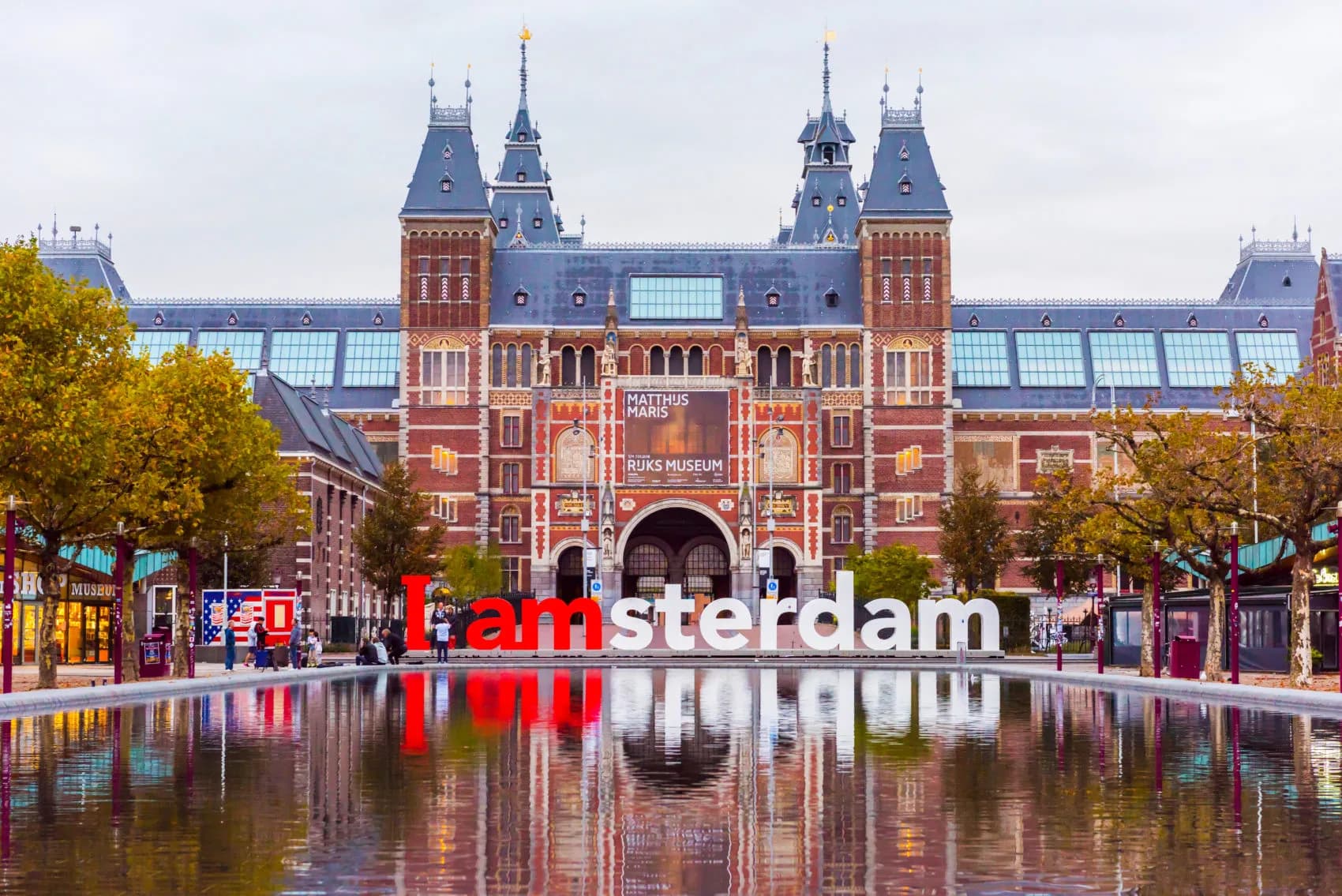
In early June 2026, KesselsKramer went under. The Amsterdam agency behind "I amsterdam" and the gloriously irreverent Hans Brinker Budget Hotel, thirty years old and once the darling of the international ad world, was declared bankrupt after three big accounts wandered off in quick succession (NL Times; RTL Nieuws, 2026).
That reads like an obituary for the industry. It isn't. Worldwide, ad spend grew by 8.6 per cent in 2025, while the revenue of the big agency networks actually shrank by 1.2 per cent (eMarketer, 2026). The number of ad agencies in the Netherlands, meanwhile, fell from over 28,000 in 2014 to around 25,360 in 2023 (Emerce/BoldData). So more money is going into advertising, and the classic agencies earn less of it. This isn't the market shrinking; it's value moving. A kind of Darwinism, under new rules. The question, then, is where the value flows, and why.
Because KesselsKramer is in good company. In October 2025, Woedend! closed after a quarter of a century, brought down by missed pitches and mounting freelance bills (Adformatie, 2025), and in March 2025 the Amsterdam court declared BSUR bankrupt, the agency behind MINI among others, after years of declining activity (Adformatie; Mediamax, 2025). And in January 2026, Food Cabinet had to give up too, the Amsterdam B Corp that spent thirteen years on campaigns for healthier, more sustainable food (Adformatie, 2026). That such a committed agency couldn't make it shows that a strong mission alone isn't enough.
Internationally this has been playing out for longer, and more quietly, but no differently. 180 Amsterdam was absorbed back in 2010 and lost the Adidas account (Campaign Asia), StrawberryFrog shut its Amsterdam birthplace (Campaign), and in 2023 J. Walter Thompson and Young & Rubicam were retired as brand names (Ad Age), while Crispin Porter + Bogusky shrank from nearly a thousand staff to some forty (Adpulp). This isn't the shock of a single season, but a line that has been running for years. There are two ways to disappear: with a bang or with a sigh.
Let me be honest here. Behind every name are entrepreneurs and teams who spent years building something they loved. I know from experience how hard a bankruptcy is, and I'd wish it on no one. This piece isn't a verdict on those who didn't make it; it's an attempt to understand what lies beneath. Because a pattern is something you can understand, and act on.
What really lies beneath
The popular story goes: mass communication is dead, the TV commercial is a fossil, reach is passé. It isn't true. The marketing science of the Ehrenberg-Bass Institute, distilled by Byron Sharp, has shown for years that brands grow through mental and physical availability; by being recognised quickly and being easy to buy (Ad Age, 2025). SWOCC confirms this for Dutch practice (SWOCC, 2023).
The shift wasn't about believing in reach, nor was it the channel; most agencies swapped the TV spot for social, online video and influencers long ago. They simply carried the broadcast logic into channels that were never built for it. The TV commercial was never the law; it was merely the delivery van. And agencies kept mimicking that delivery van, online too, long after the audience had started talking to one another. A video on social is still too often made as a shortened TV spot: broadcasting where people join in.
That left agencies vulnerable. It only turned fatal once three things changed at once: the viewer, the client and the business model. And then came the accelerant.
Three forces, and an accelerant
The viewer has moved house
Young people no longer watch linear television as a matter of course; they get their news mainly via Instagram (65 per cent), TikTok (40 per cent) and YouTube (38 per cent) (Nederlands Jeugdinstituut, 2024). Linear TV isn't dead for it; the share of young people expecting to quit within three years actually fell from 50 to 40 per cent (Marketingfacts, 2025). Attention has splintered across channels that people steer between themselves. Trust is earned in communities, not via a monologue from a canal-side office. A brand like Holie shows how that works: it grew big without classic ad campaigns, through its own story and a community that passes it on.
The client is now at the controls
In 2023, 82 per cent of marketers had an in-house agency, up from 42 per cent in 2008 (ANA, 2023); seventy per cent of brands now hold strategic capability under their own roof (WFA & Observatory International, 2023). The daily content, clients now handle themselves. The steady monthly retainer, for years the foundation under an agency, has largely gone.
The pitch as slow assassin
What's left is a maze of one-off projects, and therefore of pitches. Agencies pour unpaid hours into proposals with no commitment up front. Lose three accounts at once and the cash flow collapses; exactly what both KesselsKramer and Woedend! tripped over. Johan Kramer publicly refused unpaid pitches back in 2023 (LinkedIn, 2023). He saw it coming. It didn't help. SWOCC points the same way: what makes brands strong is a durable partnership, not an endless parade of one-off pitches (SWOCC, 2025).
AI has made the making almost free
Then the accelerant. Generative AI is pushing production costs towards zero. McKinsey estimates the productivity gain at 5 to 15 per cent of total marketing spend, some 463 billion dollars a year (Forbes/McKinsey, 2024). A TV spot that once took weeks and a small fortune can now be made in days; Kalshi's campaign for the NBA Finals was made with Google Veo 3 for roughly 2,000 dollars. WPP boss Mark Read warned that AI would profoundly reshape the industry (CNBC, 2025), and the Wall Street Journal expects AI to direct some 80 per cent of digital media buying by 2030 (WSJ, 2025).
The conclusion is blunt but simple: making the thing itself, the copy, the image, the edit, has become interchangeable. Value shifts to what AI can't do: understanding how people feel, choose and behave, and distilling a direction from it. The original idea and the human choice don't come out of a prompt (SWOCC).
Three scenarios for what's left
The survivors share a few principles: they charge for value instead of hours, stay small and close to the decision-maker, and build on the human drives beneath behaviour, such as the 24 drives that 23plusone rests on. How that looks can be mapped in three scenarios. In its 2025 trend study, SWOCC sketches six brand dilemmas; the scenarios below are the strategic answers that follow (SWOCC, 2025).
1. The algorithmic content factory. Large, tech-driven players combining data and AI into hyper-personalised campaigns at scale and low cost. Creativity is a statistical variable here; it's all about volume and optimisation.
2. The strategic culture-builders. Agencies that think at the highest level: helping organisations sharpen their purpose and bring their internal culture into line with their external brand. This work is empathetic and human, and precisely for that reason not automatable. Relationships are built for the long term, on trust.
3. The fluid collective. The end of the agency with fifty people on the payroll and an expensive building. In its place, networks of sharp specialists who convene per problem. Maximum agility, minimum overhead.
The truth will probably be a hybrid: the factory and the collective fight over execution, the culture-builders hold on to the direction. One condition applies to all three. AI and self-directed agents belong at the heart of how the business runs, rather than as a separate innovation lab on the sidelines. Workflows, project management, analysis and strategy will soon turn on cleverly deployed models that take over the routine and free people up for judgement and direction. Concretely: agents deliver twenty concept directions overnight, so the strategist spends Monday on the question of which one genuinely moves people. An agency that uses AI only to make pretty pictures faster has missed the point. One that designs its whole operation around it keeps the margin and the speed that others are losing.
So, now what?
The demise of the great creative agency is painful, and at the same time a turning point. The old route, building a brand from the ad break and running on the treadmill of unpaid pitches, leads nowhere. Anyone who understands that a strong brand grows from the inside out, from the behaviour of the people who carry it, has the wind at their back. The question isn't whether your agency survives the old campaign. The question is what you'll do now that the making has become free, and only the meaning still counts.
Sources
- Adformatie (2025), on Woedend!; Adformatie & Mediamax (2025), on BSUR; Adformatie (2026), on Food Cabinet.
- Campaign, on StrawberryFrog; Campaign Asia, on 180 Amsterdam; Ad Age (2023), on J. Walter Thompson; Adpulp (2023), on Crispin Porter + Bogusky.
- Maxime Kosterman, master's thesis on the brand strategy of Holie (University of Groningen, Campus Fryslân), on the brand growth of Holie.
- SWOCC (2025), Trend study 2025: The brand as a compass in times of paradoxical tensions; Esther Overmars & Amber Kouwen, Purpose Oriëntatie (SWOCC, 2024).